
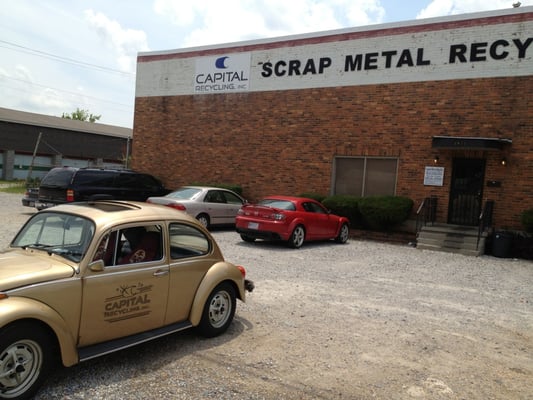
After more than two decades in business and a longstanding relationship with the City of Montgomery, Capital Recycling loses its license in a 6–3 vote. But the city’s own actions deserve just as much scrutiny.
By Southern Signal
Tuesday night’s Montgomery City Council meeting left one question hanging over City Hall.
Who’s holding the city accountable?
By a 6–3 vote, the council revoked the business license of Capital Recycling, a scrap-metal recycling operation at 3800 Mobile Highway that has served Montgomery for more than two decades.
But the most troubling revelations weren’t necessarily the allegations against the business. They involved the city’s own handling of the matter.
And they deserve answers.
When City Hall Fails to Follow Its Own Procedures
During Tuesday’s proceedings, it was revealed that city legal counsel had reportedly advised Capital Recycling that its representatives were not required to attend certain Board of Adjustment meetings.
Yet city officials reportedly acknowledged that company representatives should have attended and that proper notices had not been provided.
Let that sink in.
A business facing the potential loss of its livelihood was allegedly told by the government pursuing enforcement action that its presence wasn’t necessary.
Then that same government moved forward with revoking its license.
Was this incompetence, an administrative breakdown, or something more deliberate?
Intent cannot be established without further evidence. But the apparent procedural failures raise serious questions about whether Capital Recycling received a fair opportunity to defend itself.
If legally required notices were never delivered, the city needs to explain how those proceedings were allowed to move forward.
Due process isn’t a courtesy extended at City Hall’s convenience. It’s a fundamental protection against arbitrary government action.
Twenty Years in Business, and the City Was a Customer
Perhaps the most revealing disclosure was that Capital Recycling had reportedly served as a vendor for the City of Montgomery, accepting materials for disposal and recycling.
Now the same city contends the facility has operated outside applicable zoning requirements.
There’s an obvious contradiction here that demands an explanation.
If Capital Recycling was operating in violation of zoning regulations, when did Montgomery first become aware of it?
Why did the city continue utilizing its services?
Were violations formally documented? Were corrective measures required? Was the company given a clear opportunity to bring its operations into compliance?
And why did a situation allegedly involving decades of noncompliance reach the point of license revocation before these questions were resolved?
A longstanding relationship with the city doesn’t give any business immunity from the law. Nor does continued operation automatically establish zoning compliance.
But Montgomery’s own conduct matters.
If the city knew about violations and failed to address them, that is an accountability issue in its own right.
Government cannot selectively demand compliance while ignoring questions about its own enforcement history.
Health Concerns Deserve Evidence, Not Assumptions
The Greater Washington Park Neighborhood Association has raised concerns about the facility’s potential effect on nearby residents.
Among the claims presented is that 17 of approximately 45 residents suffer from various health conditions, including cancer.
Those concerns should not be dismissed.
But reporting illnesses and establishing their cause are entirely different matters.
Based on the information presented from Tuesday’s meeting, no scientific evidence was identified establishing a causal connection between Capital Recycling and those reported illnesses.
That distinction matters.
Residents deserve independent environmental testing and, where warranted, a public-health investigation. The business deserves to be judged on documented evidence rather than allegations treated as established fact.
Environmental accountability must rest on evidence, not speculation.
What Happens to Montgomery’s Scrap Metal?
Capital Recycling processes ferrous metals, recovering materials that can be reused rather than discarded.
Closing a facility with substantial recycling capacity raises practical questions the city should address.
Where will those materials go? Can other local facilities accommodate the volume? Will businesses face higher transportation and disposal costs?
Could reduced access to recycling increase illegal dumping or landfill disposal?
Those consequences aren’t inevitable, but they deserve consideration.
Environmental stewardship involves more than closing a facility facing complaints. It requires understanding what happens to the materials that facility once processed.
Accountability Goes Both Ways
District 4 Councilwoman Franetta Riley voted in favor of revoking Capital Recycling’s license.
Riley’s involvement in representing neighborhood concerns does not automatically create a conflict requiring recusal. But she and the other councilmembers who supported revocation owe the public an explanation of how the city’s procedural failures were addressed before the vote.
Nobody is arguing that Capital Recycling should operate above the law.
If zoning violations exist, document them. If environmental regulations have been violated, enforce them. If the facility creates a legally established nuisance, require corrective action.
But hold City Hall to those same standards.
If proper notices weren’t provided, explain why.
If the city maintained a vendor relationship with a business it now considers noncompliant, explain how that relationship continued.
If zoning problems existed for years, explain why they weren’t addressed sooner.
And if the city contributed to this situation through inconsistent oversight or procedural failures, acknowledge that responsibility.
Tuesday night’s 6–3 vote may have revoked Capital Recycling’s business license, but it didn’t erase Montgomery’s obligation to answer for its own conduct.
City Hall has demanded accountability from Capital Recycling.
Now it’s time for City Hall to demonstrate some of its own.

Jason Davenport is a seasoned media professional with over two decades of experience in the fields of broadcasting, audio/video production, and media consulting. Based in Montgomery, Alabama, Jason is the owner of Deep South Media, where he specializes in providing innovative solutions for clients, including podcasting, blogging, web design, and social media management.