
When Montgomery launched its Downtown Ambassadors Program in 2025, city leaders rolled it out like the beginning of a downtown renaissance.
There were ribbon cuttings. Press releases. Television coverage. Carefully staged photo opportunities. Residents were told the city was entering a “bold,” “vibrant,” and “transformative” new chapter for downtown Montgomery.
For about a month, the promotional machine ran at full speed.
Then the headlines faded.
The buzzwords disappeared.
And a year later, the reality sitting in front of Montgomery residents looks far less revolutionary than what was originally advertised.
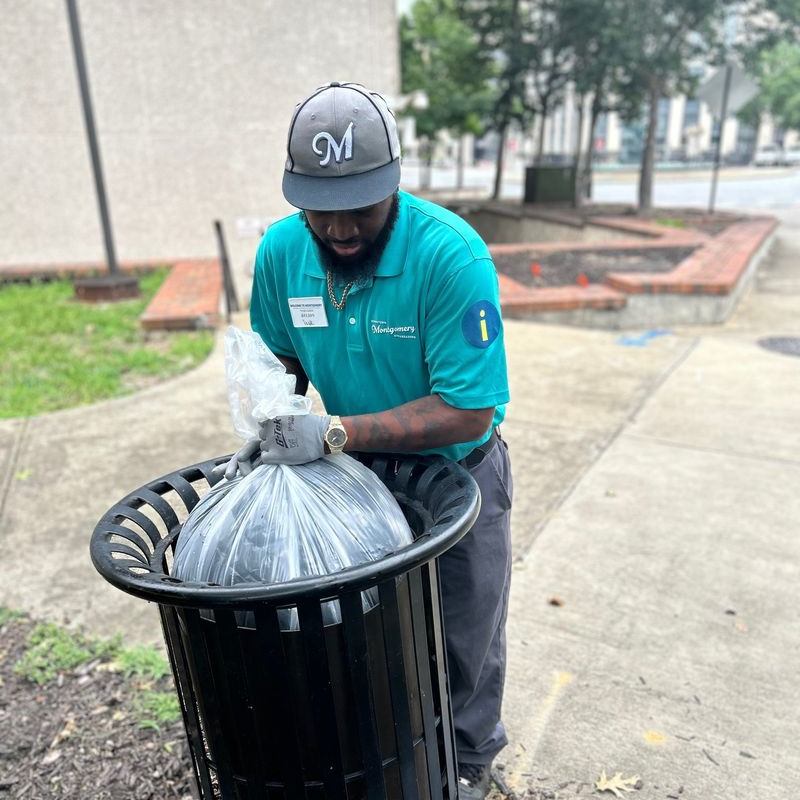
The “ambassadors” are essentially glorified sanitation workers wearing nicer uniforms.
That is not meant as an insult to the workers themselves. Honest work deserves respect. Cities need people cleaning sidewalks, removing trash, reporting issues, and maintaining public spaces.
The problem is not the employees.
The problem is the illusion city leadership tried to sell around them.
What officials marketed as “environmental cleaning,” “hospitality outreach,” and “safety support with SMART tracking” ultimately boiled down to people sweeping sidewalks, picking up litter, monitoring public spaces, and serving as a highly visible downtown presence.
Necessary work? Absolutely.
Transformational urban policy? Not even close.
Montgomery did not unveil a revolutionary downtown revitalization strategy in 2025. It unveiled a rebranding exercise.
And Montgomery is far from the first city to do it.
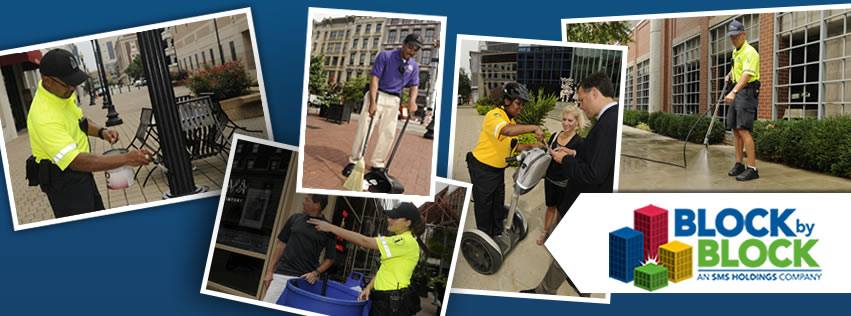
The city contracted with Block By Block, a Kentucky-based company operating similar “ambassador” programs in more than 170 districts nationwide. The model has existed for years in cities across America, often attached to business improvement districts and downtown redevelopment campaigns.
Critics in other cities have long argued these programs prioritize aesthetics and commercial image management over solving deeper structural problems.
A 2013 investigation by theStreetSpirit.org described Block By Block programs as systems designed to create controlled downtown environments aimed at making commercial districts more attractive to investors, tourists, and shoppers. The report also argued these programs frequently blur the line between hospitality and the quiet displacement of visible poverty from public spaces.
Even Block By Block’s own language emphasizes addressing “quality of life” concerns and “unwanted activities,” terminology critics say often becomes vague shorthand for managing appearances rather than confronting root problems.
And there is another reality officials rarely mention during the launch ceremonies.
These programs do not always deliver the dramatic results promised in the marketing brochures.
Earlier this year, the City of Eau Claire, Wisconsin ended its Block By Block ambassador contract a full year early after city officials admitted the program failed to meet expectations involving cleanliness, safety, and business outreach.
According to WEAU-TV, Eau Claire Deputy City Manager Dave Solberg openly acknowledged disappointment with the program’s results. The city ultimately decided the remaining duties would simply be handled through overtime by existing custodial staff and street workers.
In other words, once the branding disappeared, the city arrived back at the same conclusion many taxpayers already suspected: these programs often amount to sanitation and maintenance functions wrapped in consultant language and sold as revitalization.
That gets to the core issue in Montgomery.
For years, residents have watched an endless cycle of downtown “revitalization” campaigns. Strategic plans. Slogans. Streetscape projects. Murals. Grants. Launch ceremonies. Rebranding efforts.
Yet many of the same underlying concerns remain.
Blight from long-closed businesses still exists.
Foot traffic still fluctuates heavily outside of events and government office hours.
Large sections of downtown still struggle to maintain consistent activity after dark.
Public perception surrounding safety remains fragile.
And despite years of promotional campaigns, many Montgomery residents still do not view downtown as a naturally thriving destination.
So instead of confronting those structural realities directly, city leadership once again turned toward optics.
That is why the language surrounding this program matters so much.
Sanitation becomes “environmental enhancement.”
Walking around downtown becomes “hospitality engagement.”
Monitoring public areas becomes “SMART tracking.”
The entire rollout felt less like meaningful urban policy and more like a corporate consulting presentation brought to life.
Even the word “ambassador” feels carefully engineered.
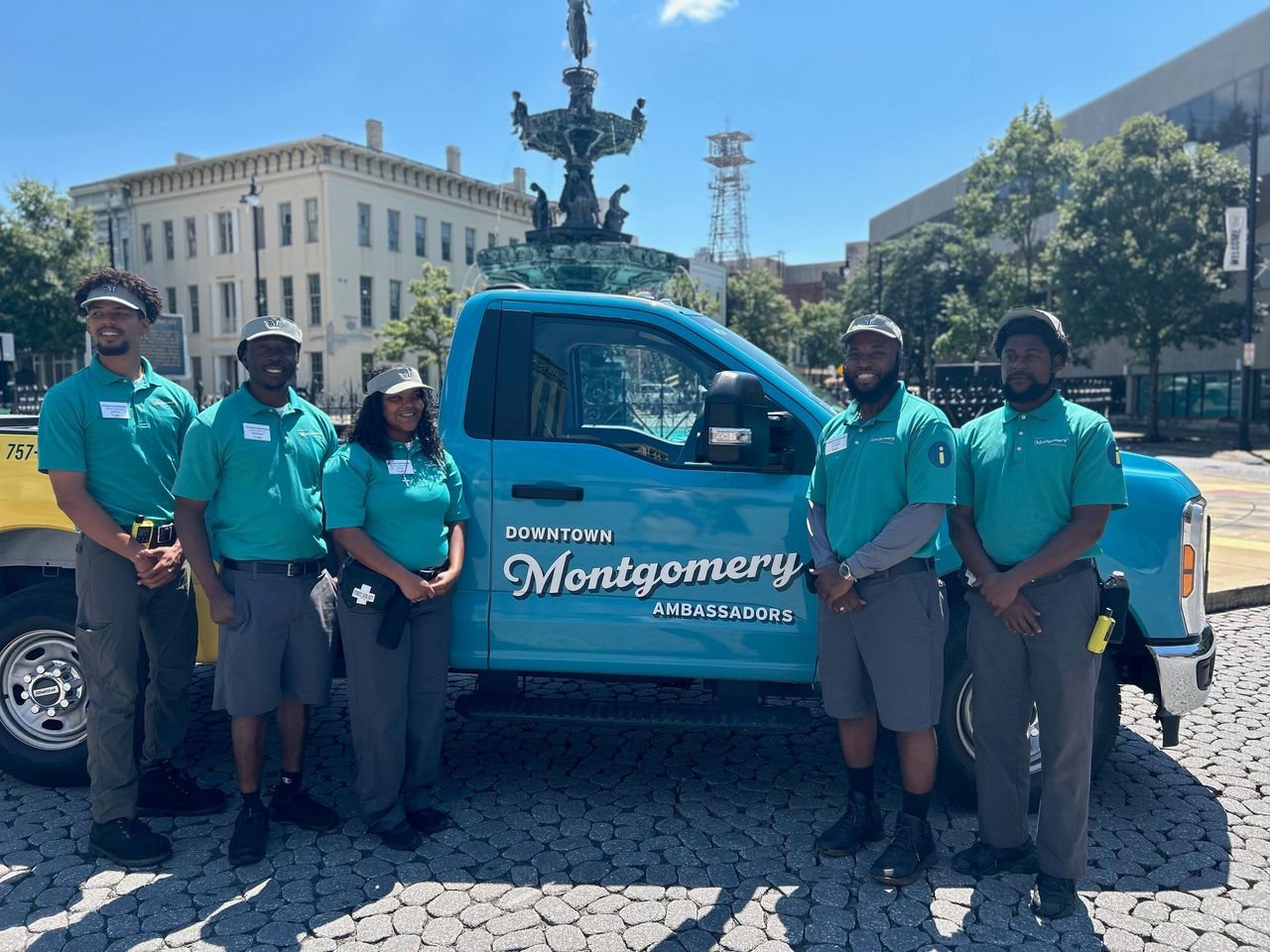
An ambassador traditionally represents something thriving, influential, and respected. But downtown Montgomery does not need ambassadors nearly as badly as it needs authentic economic gravity. It needs businesses capable of surviving without constant subsidy programs and temporary image campaigns. It needs residential density. It needs sustained private investment. It needs organic activity that exists independently of government promotion.
Most importantly, it needs authenticity.
Because people can tell when a city is attempting to manufacture vibrancy instead of creating the conditions where vibrancy develops naturally.
The uncomfortable truth is that ambassador programs are politically attractive precisely because they create visible optics without requiring difficult structural solutions. Uniformed workers cleaning sidewalks and greeting pedestrians photograph well. They reassure investors. They generate headlines. They create the appearance of momentum.
But appearances are not outcomes.
A cleaner sidewalk does not automatically create economic sustainability.
A friendly greeter does not solve long-term vacancy issues.
A tracking dashboard does not create culture.
And better uniforms do not magically transform sanitation work into urban renewal.
Because eventually the ribbon cuttings end.
The media attention fades.
The slogans disappear.
And all that remains is the reality people experience every day.

Jason Davenport is a seasoned media professional with over two decades of experience in the fields of broadcasting, audio/video production, and media consulting. Based in Montgomery, Alabama, Jason is the owner of Deep South Media, where he specializes in providing innovative solutions for clients, including podcasting, blogging, web design, and social media management.